


Every good matcha carries the character of where it comes from. Ours carries Yame.
Known for its deep umami, soft nuttiness, and beautifully smooth shade-grown teas, Yame is one of Japan’s most respected tea regions. It is the origin of Romi’s ceremonial matcha — and the landscape behind the flavour of our matcha.
A tea region with 600 years of history
Around 600 years ago, during Japan's Muromachi period, a Zen master named Shuzui returned from training in China's Ming Dynasty. He built a Zen temple called Ujako in Kanoko Village, Chikugo Province — in the hills of what is now Yame City, Fukuoka — and brought tea cultivation with him.
But he did not simply bring tea leaves. He brought knowledge: how to grow tea, how to process it, and how to share it. That knowledge slowly spread through the surrounding villages, becoming part of the landscape and culture of Yame.
By the mid-Edo period, tea production had grown significantly, especially around the Kuroki district. Through the Meiji and Taisho eras, cultivation continued to expand. It was interrupted during the Second World War, then revived again when tea became an export product for the United States market. By the 1960s, with growing domestic demand and improved machinery, Yame had become one of Japan's most respected tea-producing regions.
Why Yame matters for matcha
What makes Yame special is not scale. Fukuoka Prefecture produces less tea by weight than larger, better-known regions such as Shizuoka and Kagoshima. But Yame has never been about producing the most tea. It is known for producing some of Japan's most prized tea.
Many Yame farmers practise what is known as heavy bud cultivation — reducing the number of buds on each plant so the remaining buds can grow larger, denser, and more concentrated in flavour. It is a slower, more selective way of farming. Less volume, more depth.
Most Yame farmers also focus heavily on the first harvest, when the tea leaves are at their freshest, most delicate, and most flavourful. For matcha, this matters enormously. The quality of the leaf is everything.
That commitment to quality has been recognised again and again. Yame has won Japan's National Tea Competition Production Area Award 16 years in a row. In the Gyokuro category, a single producer — Tsutomu Kurazumi of Seikeien — has held the Minister of Agriculture, Forestry and Fisheries Award for 24 consecutive years.
Yame is especially famous for Gyokuro — one of Japan's most prized shade-grown teas. Traditional Yame Hon Gyokuro is made with great care: the tea plants are covered before harvest, often with woven rice straw, then the leaves are handpicked one by one.
Matcha begins with tencha, not Gyokuro, but the philosophy is closely connected. Shade-growing, first-harvest leaves, careful selection, and a focus on depth of flavour are all part of the same Yame tradition. The region's success with Gyokuro is one of the clearest signs of the standard of tea grown here.
The terroir behind Yame matcha
The landscape plays its part too. Yame sits among misty mountains, with cool mornings, natural cloud cover, and generous rainfall during the growing season. Its soil is deep, well-draining, and naturally suited to tea plants. These conditions help create leaves with softness, umami, and quiet complexity.
This is why Romi sources from Yame. Not simply because it is a celebrated name, but because the history, climate, farming philosophy, and craft all show up in the final cup.
What Yame matcha tastes like
Yame matcha is often known for its smooth body, low bitterness, rounded umami, and gently nutty character. In the bowl, this can taste soft, creamy, and balanced — the kind of matcha that feels rich without being harsh.
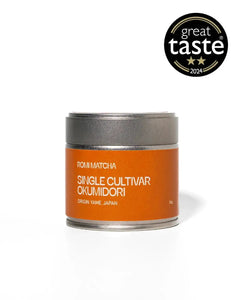
You can taste this especially in our Okumidori Matcha, with its mellow nuttiness and creamy umami, and in our signature Ceremonial Blend, created for a smooth, balanced cup at home.
For more on how to prepare matcha properly, explore our Matcha Guide.
Six hundred years of cultivation. A region shaped by mist, mountains, shade, and patient craft.
That is the ground Romi Matcha grows from.
Romi Matcha · Single-origin from Yame, Fukuoka, Japan