


4 min read ·
Almost everything we tell you about matcha is about speed. First harvest, milled fresh, sealed at the farm, drunk within weeks. Matcha is a ground fresh leaf, and fresh leaves fade.
So it comes as a surprise that Japan's oldest tea traditions involve deliberately not drinking the new season's tea — putting it away for months and waiting for autumn. That practice is called kuradashi, and it's one of the most quietly sophisticated ideas in Japanese tea.
Tea that improves by waiting
After the spring harvest, tencha — the shaded leaf that becomes matcha — is sealed into a large ceramic tea jar called a chatsubo. The jar is closed and kept somewhere cool, dark and stable through the heat of summer. Historically that meant a storehouse (kura) or, for the most prized tea, cool mountain storage. Today it usually means refrigerated storage, but the principle hasn't changed.
Inside the sealed jar, with almost no oxygen and no light, the tea doesn't oxidise. It rests. Over several months the astringency softens, the aroma settles from bright and grassy into something rounder and deeper, and the umami comes forward. Producers describe the result as mellow — the same tea, with its corners smoothed.
Then, in autumn, the jar is opened.
Kuchikiri: the opening of the jar
The opening isn't casual. In the tea ceremony it has its own occasion — kuchikiri no chaji (口切りの茶事), literally “the cutting of the mouth,” when the seal on the year's tea jar is cut open for the first time.
It's traditionally held in November, alongside the seasonal switch to the sunken hearth (ro), and it's often described as the tea world's new year: the moment the year's tea finally becomes drinkable. The tencha is ground fresh from the jar and served.
A tea culture that could have drunk its best tea in May chose to wait until November — and then made the waiting into a ceremony.
The idea travelled beyond the tea room, too. In the Edo period, jars of Uji tea were carried in formal procession to the shogun in Edo — the Ochatsubo Dōchū, the tea jar procession — a journey serious enough that ordinary traffic was expected to clear the road. Tea in a sealed jar was treated as something close to treasure.
Ageing versus going stale
This is the part worth understanding properly, because “aged matcha” and “old matcha” sound like the same thing and are close to opposites.
Kuradashi is ageing in the absence of air
Sealed jar, cool, dark, minimal oxygen. Under those conditions the tea's compounds settle and integrate. Nothing is being destroyed; things are slowly finding their balance.
A tin going stale is oxidation
Every time the lid comes off, oxygen goes to work on the chlorophyll and the amino acids that make matcha green, sweet and savoury. The colour dulls, the sweetness disappears, and the bitterness has nothing left to balance it.
Matcha can benefit from time, but never from air.
That's also why leaving a tin in the cupboard until November won't give you aged tea — it'll give you flat tea. The whole tradition depends on the seal. Keep the air out, though, and a version of it does work at home: a firmly sealed tin in the fridge for a couple of months will soften a tea you find too sharp.
Does aged matcha taste better?
Not better — different, and it's a matter of preference.
Fresh first-harvest matcha is bright, vivid and immediate: the electric green, the sweetness right at the front, that clean marine edge. That's what most people fall in love with.
Kuradashi is quieter and rounder. Less sparkle, more depth. Softer astringency, longer finish, a certain settled quality. In the tea ceremony, that mellowness is precisely the point — it suits the contemplative register of a formal service in a way a bright spring tea doesn't.
If you like your matcha vivid and fresh, you may find aged tea muted. If you like depth and softness, it can be lovely. Neither position is wrong.
What it tells you about how tea should be kept
Kuradashi is, in effect, a centuries-old proof of something quite modern: tea keeps beautifully when you take the oxygen away, and degrades fast when you don't.
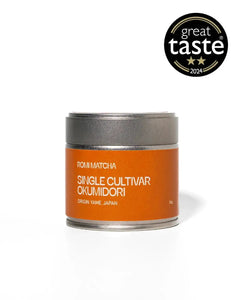
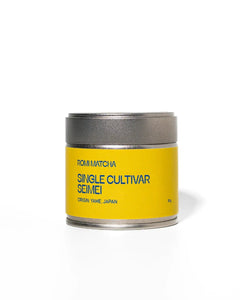
It's the same principle behind the way our own tins are packed. Each one is nitrogen-flushed — the oxygen replaced with nitrogen — and sealed at the farm in Japan the moment the tea is milled, then never reopened until it reaches you. Not a chatsubo in a mountain storehouse, but the same idea in modern form.
Our farm in Yame does something closer to the tradition, too: the leaf is aged in cool storage for months, sometimes up to a year, before it's ever ground.
Common questions
What does kuradashi mean?
Kuradashi (蔵出し) means “brought out of the storehouse.” In tea, it refers to leaf sealed in jars after the spring harvest and aged in cool, dark storage for months before being opened — usually in autumn.
What is kuchikiri?
Kuchikiri (口切り) is the ceremonial opening of the year's sealed tea jar, traditionally held in November. It's often considered the start of the tea ceremony year, and the tea is ground fresh from the jar and served.
Does matcha get better with age?
Only under sealed, cool, oxygen-free conditions, as in kuradashi — where astringency softens and umami rounds out. Matcha exposed to air simply oxidises: it loses colour, sweetness and aroma. Time helps; air doesn't.
Can I age matcha at home?
To a degree, yes — if you keep the air out. Seal the tin firmly and keep it in the fridge for a couple of months and a sharp tea will soften. It works best on a tin that's unopened or barely used, since a half-empty tin has enough air in it to oxidise rather than mellow. Always let the sealed tin come fully to room temperature before opening, or condensation will form on the powder. What won't work is leaving an opened tin in a kitchen cupboard — that's staling, not ageing.
Is kuradashi matcha better than fresh matcha?
Neither is better — they're different styles. Fresh first-harvest matcha is bright, sweet and vivid. Kuradashi is rounder, softer and deeper. Which you prefer is a matter of taste and occasion.
What is a chatsubo?
A chatsubo (茶壺) is the large ceramic jar used to store tencha after harvest. It's sealed for the ageing period and ceremonially opened at kuchikiri.