


Saemidori Matcha: The Cultivar Guide
Nutty, lightly roasted, softly floral — meet the cultivar that earns its place alongside Okumidori.
Not all matcha tastes the same. And if you've only ever tried a blend, you haven't yet discovered one of the most interesting things about ceremonial matcha — the cultivar. The tea plant variety. The thing that gives each tin its own personality.
Saemidori is one of those cultivars that quietly earns its place. It's not the loudest matcha in the room. It's the one you keep coming back to.
What is Saemidori?
Saemidori (冴みどり) is a Japanese tea cultivar whose name translates to "clear green" — and one look at the powder tells you why. It has a vivid, almost luminous colour that's striking even before you whisk it.
It's a cross between two well-known cultivars, Yabukita and Asatsuyu, which gives it an interesting flavour bridge: some of the sweetness and freshness of Asatsuyu, with the more structured, roasted depth of Yabukita. The result is a matcha that's delicate without being light, complex without being heavy.
Saemidori is considered an early-sprouting cultivar — its leaves emerge in spring before many others, which gives them a tenderness and freshness that carries straight through into the cup. Grown in the misty mountains of Yame and shaded for over 21 days, Romi's Saemidori develops the kind of concentrated flavour and L-theanine content you'd expect from first harvest ceremonial grade.
What does Saemidori taste like?
This is a matcha you'll want to slow down for. The first thing you notice is the nuttiness — warm, lightly roasted, like toasted walnuts with a gentle sweetness underneath. Then the umami comes in, smooth and clean, with a soft floral finish that lingers.
It's not as creamy or full-bodied as Okumidori. It's more refined — cleaner on the palate, with a freshness that makes it feel almost springlike. If Okumidori is the matcha equivalent of a warm, grounding cup of coffee, Saemidori is the one you'd reach for when you want clarity alongside your calm.
"The one you reach for when you want clarity alongside your calm."
Saemidori vs Okumidori — what's the difference?
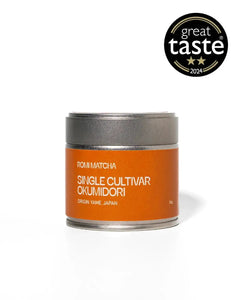
If you've tried Romi's Okumidori, you already know it well: creamy, cashew-like, deeply umami, and wonderfully grounding. It's the triple award-winner. The everyday hero. The one that converts coffee drinkers.
Saemidori sits beside it — not above or below, but in its own lane. Here's how they compare:
| Saemidori | Okumidori | |
|---|---|---|
| Meaning | Clear green | Deep green |
| Taste | Nutty, roasted, floral, fresh | Creamy, cashew, full umami |
| Body | Light to medium | Medium to full |
| Bitterness | Very low | Very low |
| Best for | Usucha, light lattes | Usucha, creamy lattes |
| Energy feel | Clear, refreshing wave | Grounding, steady wave |
| Who it suits | Those who love nuance | Beginners and daily drinkers |
Think of it this way: if you were choosing a wine, Okumidori is a rich, buttery Chardonnay — satisfying, crowd-pleasing, hard to fault. Saemidori is a crisp Burgundy — quieter on first impression, but with layers that reveal themselves the more attention you pay.
Why Yame makes the difference
Saemidori is grown in several regions across Japan, but there's something particular about Yame. The misty mountain climate, the mineral-rich soil, the tradition of careful hand-picking — all of it shapes the final flavour in ways that are genuinely hard to replicate elsewhere.
Yame teas are known for their chestnut-like nuttiness and smooth complexity. It's the region's signature. And in Saemidori, that Yame character gives the cultivar's natural delicacy a richness and depth it wouldn't otherwise have. The nuttiness you taste isn't accidental — it's the land, the climate, and centuries of craft working together.
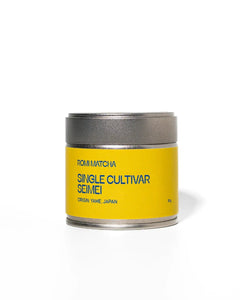
Single Cultivar Saemidori Matcha — Nutty, lightly roasted, with smooth umami and a soft floral finish. Grown in Yame, Fukuoka. Shade-grown for 21+ days.
Or try the Yame Duo — Saemidori and Okumidori together, so you can taste the difference for yourself. Two cultivars, one origin, two completely different moods.
What does Saemidori matcha taste like?
What does Saemidori mean?
What's the difference between Saemidori and Okumidori?
Where is Romi's Saemidori grown?
Is Saemidori good for matcha lattes?
What is Yame Saemidori matcha?
Ready to meet Saemidori?
Shop Saemidori matcha